Handling Comments About Your Skin: A Guide for Navigating Social Situations

Dec 1st, 2025

Online test
Find out the severity of your symptoms with this free online test
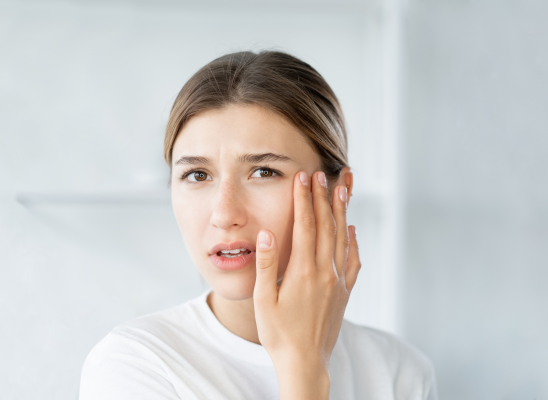
Family gatherings and social occasions can be wonderful opportunities to connect with loved ones. They can also bring unwanted attention to your skin. When you're trying to manage visible effects of your skin picking, comments from others, even well-intended, can feel invasive and uncomfortable. Dealing with social situations is an often cited cause of anxiety and avoidance when you’re trying to manage skin picking.
It might be tempting to just avoid social situations altogether, but the good news is, you don’t need to. You have complete control over how you respond in those moments and it can move the moment from uncomfortable to empowering! Here's how to navigate these moments with confidence and grace.
#1 You Don't Owe Anyone an Explanation
You don’t owe anyone an explanation. Period. Full stop.
You are not required to discuss your skin, explain your scars, or educate anyone about skin picking disorder simply because they ask. "I'd rather not discuss it" is a complete sentence, and you have every right to use it.
If someone persists after you've set this boundary, you can calmly repeat, "I appreciate your concern, but I'm not comfortable talking about this." Standing firm in your boundaries isn't rude. It is self-respect and good self-care.
Now of course, there will be times when you may want to be a little more forthcoming or informative and that’s ok too. But when, where and how are always your choice.
#2 Prepare Your Responses in Advance
Questions and comments can sometimes catch you off guard and knowing what to say isn’t always easy. Having a few prepared responses can help you feel prepared.
Keep it simple. If someone asks about your skin, a brief, honest explanation is sufficient:
- "It's a skin condition I’m managing with my healthcare provider."
- "I know it's noticeable, and I'm working on it. Can we talk about something else?"
Sometimes, comments can feel intrusive or judgmental. If that happens, it’s ok to be direct:
- "That's really personal, and I'm not comfortable discussing it."
- A simple smile and subject change make a powerful statement too: "So, how's work been treating you?"
Set your boundaries with confidence.
#3 Redirect the Conversation
Remember, every comment doesn’t require an explanation. Sometimes it’s easier to gently move the conversation on to something else. This keeps you in control without getting drawn into an unwanted discussion.
- "I'm good, thanks. Hey, did you try the dessert yet?"
- "All good! Hey, tell me about that new job. Are you loving it?"
#4 What NOT to Say (And What to Avoid)
While you're navigating these conversations, here's what you can leave behind:
- Over-apologizing: You don't need to say, "I'm sorry about how my skin looks." Your appearance doesn't require an apology.
- Detailed medical explanations: Unless you want to share, a social gathering is probably not where you want to discuss your skin picking.
- Accepting unsolicited advice: You’ll no doubt encounter people who genuinely want to help and offer advice. No matter how well-intentioned, "Have you tried [insert remedy]?" doesn't require more than "Thanks, I'll keep that in mind" before moving on.
#5 Build Your Support System
Social situations are just stressful and a great way to feel more comfortable is to enlist support. Having someone you trust to help you navigate the situation can help you remain calm and feel less isolated. Enlist the help of your buddy beforehand and let them know how they can help support you. And, have a code word or sign to let them know if you’re really struggling.
#6 Practice Self-Compassion
Managing comments about your appearance takes a lot of emotional energy. It can be exhausting! After challenging social interactions, it’s important to take care of you. It’s a time to prioritize self-care, and practice self-compassion. You are doing the best you can and deserve grace and compassion. Remember that other people's comments reflect their own limitations in understanding, not your worth.
You're Stronger Than You Know
Your skin is but one part of your story and does not reflect who you are. It is your story to tell in the way you choose to tell it. Every time you show up at a social gathering, you're demonstrating resilience. Every time you set a boundary or redirect a conversation or choose your path to recovery, you're practicing self-advocacy. And you decide how to protect your peace.
Navigating social situations isn’t always easy and can create unnecessary anxiety and stress. The good news is you don’t have to do it alone. A skilled therapist who understands skin picking disorder can help you find your voice and set the boundaries that feel right to you. At Skinpick, we have online resources and support available. We also have a team of experienced therapists who can help you manage your skin picking in ways that work for you and help you navigate those sticky social interactions with confidence. See all the resources available to you at Skinpick.
References
1. Anderson, S., Clarke, V., & Thomas, Z. (2022). The problem with picking: Permittance, escape and shame in problematic skin picking. Psychology and Psychotherapy: Theory, Research and Practice, 96(1), 83-100. https://bpspsychub.onlinelibrary.wiley.com/doi/10.1111/papt.12427
2. https://www.reddit.com/r/Dermatillomania/comments/1frp3ki/what_do_you_say_when_someone_asks_about_it/
3. TLC. (2025, June 17). 26 tips for skin picking: A to Z. The TLC Foundation. https://www.bfrb.org/post/26-tips-for-skin-picking-a-to-z
4. NAMI. (2024, February 7). {OG: Title}. National Alliance on Mental Illness (NAMI). https://www.nami.org/complimentary-health-approaches/my-battle-with-skin-picking/
Online test
Find out the severity of your symptoms with this free online test



Start your journey with SkinPick
Take control of your life and find freedom from skin picking through professional therapy and evidence-based behavioral techniques.
Start Now